Condition Monitoring with VibGuard IIoT Helped Two Customers Avoid Over $1.7M in Damage and Downtime
Case study insights provided by Yellotec, a Fluke Reliability partner based in South Africa.
The early signs of failure are rarely missed because they’re invisible. They’re missed because no one’s looking at the right data, at the right time.
That’s where real-time condition monitoring changes the equation. Instead of relying on intermittent checks or reactive alarms, it gives teams the signal clarity and context needed to act early and decisively.
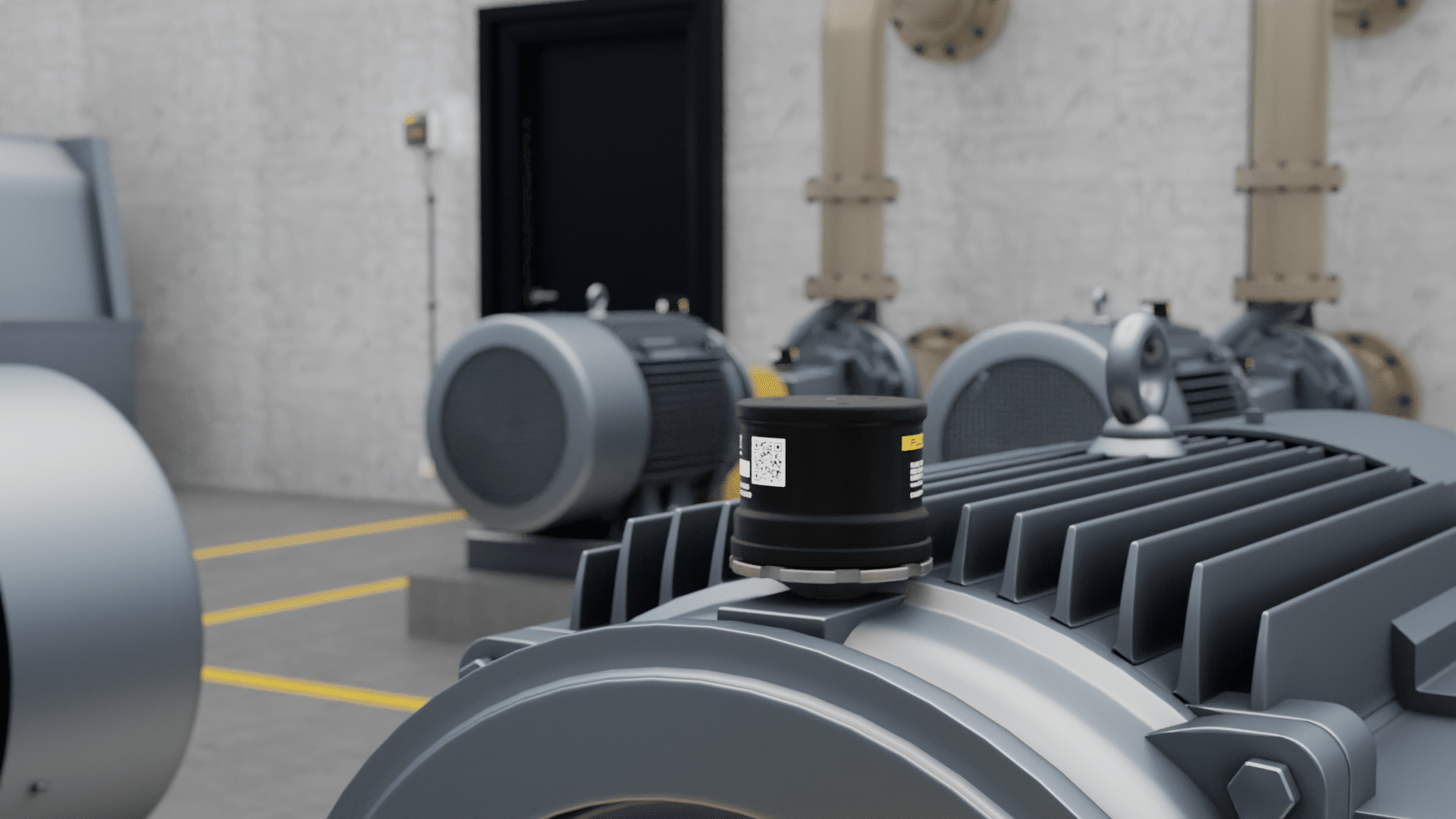
With VibGuard IIoT, that context comes from high-frequency data capture, multi-channel diagnostics, and advanced fault detection working continuously in the background. With support for up to 20 vibration channels per device, VibGuard IIoT uses synchronous sampling to detect subtle shifts, track trends, and deliver early warnings. In two recent cases, that insight helped teams sidestep over $1.7 million in losses. The cases — both reported by Yellotec, a longtime condition monitoring partner in South Africa — highlight how early warnings translate into real-world savings.
Two Real-World Saves with VibGuard IIoT
| Conveyor Motor Saved | Crusher Breakdown Prevented |
|---|---|
| Asset: 750 kW incline conveyor motor | Asset: Primary gyratory crusher |
| Issue: Elevated motor bearing vibration | Issue: Spike in gear mesh frequency amplitude |
| Diagnosis: Electrical fluting caused by VSD operation | Diagnosis: Sheared dowel pins at the step bush |
| Data: 177.6 Hz harmonics + 5 kHz acceleration peaks | Data: Gear mesh sidebands + 2 Hz modulation |
| Action: Motor replaced after failed lubrication attempt | Action: Dowel pins replaced; vibration normalized |
| Result: R6.7 million ($386,000) saved | Result: R26.7 million ($1.52 million) saved |
Here’s a closer look at what happened in each case.
Case 1: Conveyor Motor — Electrical Fluting Caught Before Failure
At a high-throughput colliery site, a 750 kW incline conveyor motor began showing elevated bearing vibration. The vibration wasn’t high enough to trigger alarms, but it was consistent—and worth a closer look, especially since the motor was a heavily utilized asset with a high cost of failure. With an estimated event downtime of five hours and a high cost to repair, the consequences of inaction would have been substantial.
VibGuard IIoT had been continuously logging high-frequency vibration and acceleration data at multiple points on the motor. Spectral analysis revealed harmonics at the outer race defect frequency (177.6 Hz), high-frequency acceleration peaks around 5 kHz, and sidebands at 10.67 Hz—matching the bearing’s cage frequency (FTF). Modulation at twice the line frequency confirmed a classic fault signature: electrical fluting.


Based on the vibration signature and the motor’s VSD configuration, the team concluded the root cause was electrical fluting. Without a shaft grounding brush, circulating currents had likely been discharging through the bearing, accelerating wear.
Because the team recognized the fault signature and understood its implications, they were able to act decisively. Lubrication was attempted but failed to reduce vibration. The motor was replaced in a planned window, preventing failure, avoiding downtime, and sidestepping roughly $386,000 in potential losses.
Case 2: Primary Crusher — Early Detection Prevents Major Failure
A primary gyratory crusher began exhibiting elevated vibration levels. Vibration data collected from the motor drive-end in the axial direction showed a sharp rise in velocity—from 0.4 mm/s to 4.8 mm/s.
A deeper spectral analysis revealed increased amplitude at the input pinion gear mesh frequency (157 Hz), along with 2 Hz sideband activity tied to the main shaft rotational speed. Though the spike showed up at the motor, the vibration pattern pointed to a deeper mechanical issue. All evidence suggested that the origin of the anomaly lay at the mantle, specifically, looseness caused by sheared dowel pins at the step bush, which secures the main shaft to the countershaft.

The diagnostic team conducted an extensive inspection and submitted a full report to the relevant engineer and OEM. The fault was confirmed, and the damaged dowel pins were replaced.
Had the issue progressed unnoticed, it could have triggered cascading internal damage, from the piston wear ring to the eccentric and hydroset components. That would have required removing both the main shaft and hydroset assembly – a costly and time-intensive repair.
Here’s what the team avoided by catching it early:
- Repair time avoided: 32 hours
- Stockpile coverage: 24 hours of buffer feed
- Net unplanned downtime avoided: 8 hours
- Downtime cost per hour: Estimated at R3.3 million
- Total potential loss: R26.7 million (approximately $1.52 million)
Proactive Monitoring Pays Off
In both cases, early warnings were detected, correctly diagnosed, and acted upon before failure had a chance to escalate. VibGuard IIoT delivered those insights not from a single data spike, but from context—baselines, trends, and subtle shifts tracked continuously. That’s what helps teams understand not just what failed, but why.
That’s the value of real-time condition monitoring: fewer surprises, faster decisions, and real financial impact. Across industries, VibGuard IIoT is helping reliability teams shift from reactive repairs to strategic asset management—one machine at a time, one insight at a time.
Click here for more information on VibGuard IIoT.