Understanding Thermal Growth and Its Impact on Shaft Alignment
The maintenance team did everything right: They shut down the motor, took precise shaft alignment measurements, and made the necessary adjustments. At room temperature, the numbers were perfect. But a few hours after startup, something was wrong.
Machine vibration was higher than expected. Bearings ran hotter than usual. Couplings showed signs of premature wear. Within weeks, the team troubleshoots again, wondering what they missed. Most technicians assume that if a machine is aligned at rest, it will stay that way. But once the system is up and running, heat changes everything.
Thermal expansion is the silent force that changes shaft alignment when temperatures rise. As rotating equipment heats up, metal components expand — sometimes by mere thousandths of an inch, sometimes by millimeters. High-temperature environments, such as power plants and refineries, are especially vulnerable to this thermal dynamic change.

The Invisible Shift: How Heat Changes Alignment
While most teams understand that heat causes expansion, they don’t realize how unpredictable it can be. Uneven heating, varying material properties, and different load weights mean thermal growth does not always happen the way you would expect. And because thermal expansion occurs in all directions, alignment changes are not always linear or even. One part of the machine may heat up faster than another, or one material may expand more than its nearby counterpart.

Therefore, alignment that looks perfect in the workshop seems to suddenly turn into misalignment in the field. This can lead to:
- Excessive vibration
- Increased energy consumption
- Premature bearing and seal failure
- Unplanned downtime
And shaft misalignment is not the only concern. If a machine runs hotter than expected, it could signal bearing wear, electrical inefficiencies, or other underlying issues. Even with proper lubrication, friction still generates heat. Motors and electrical components add to the load as resistance builds in their circuits.
Left unchecked, what starts as thermal expansion alignment issues can turn into a much bigger reliability problem — costing thousands in downtime, repairs, and lost production.
Thermal Growth in Different Asset Types
Thermal growth can have a significant impact on turbine shaft alignment, particularly in large industrial steam or gas turbines.
Because different parts of a machine heat at varying rates and amounts, they can expand unevenly. As a turbine heats up, the shaft and casing expand, which can shift the rotor centerline vertically and/or horizontally. This change misaligns the shaft relative to the driven equipment (e.g., generator, compressor), potentially leading to coupling strain, vibration, or even bearing damage.
But thermal expansion affects a wide range of rotating equipment, not just turbines — and each asset type reacts to heat differently.
Pumps, particularly vertical pumps, experience axial and radial expansion that can shift shaft position significantly. Their long shaft lengths and vertical orientation make them especially vulnerable to misalignment from bottom-to-top thermal gradients.
Electric motors heat unevenly depending on ventilation, mounting surfaces, and load conditions. Misalignment from thermal growth often appears as vibration spikes during startup or after long runs.
Compressors run under high pressures and fluctuating loads. This makes them prone to asymmetrical heating — especially if adjacent systems (e.g., piping or coolers) apply uneven stress. Shaft centerlines can shift in unexpected ways as temperature rises.
Gearboxes may see thermal expansion in both housings and shafts, leading to internal misalignment. Lubricant temperature also plays a role: as oil heats up, viscosity changes accelerate internal component wear if misalignment occurs.
Understanding the heating patterns unique to each machine type helps determine thermal alignment targets more accurately and supports early detection of misalignment-related faults.
How Engineers Account for Thermal Growth
Design and maintenance engineers have long used concepts such as “cold alignment” and “hot alignment” to address thermal movement. But the key lies in knowing when and how to apply them.
Cold alignment involves intentionally offsetting components during shutdown, so they move into alignment once the machine reaches operating temperature. This strategy depends on accurately predicting how much each component will grow.
Hot alignment, in contrast, entails measuring machines while they’re hot, either during operation or after a controlled shutdown. This is useful when you want to know the “true” running position of a component.
Many original equipment manufacturers (OEMs) now provide thermal targets or offset values to assist with installation. These values help technicians know how far to shim or move components during initial alignment to account for growth.
Why Traditional Methods Struggle with Thermal Growth
Manual alignment tools like feeler gauges and dial indicators work well for static conditions — but thermal expansion introduces dynamic variables that these tools simply cannot track.
Thermal growth is rarely uniform. For example, fan-cooled motors may cool unevenly across their housing, causing asymmetric shaft movement. Dial indicators can’t easily detect these shifts, especially when they occur gradually during warm-up.
Shaft misalignment due to thermal expansion may appear minimal at shutdown, but once heated, vertical growth or angular offset becomes apparent. Traditional methods don’t account for directionality or rate of thermal change — and by the time someone notices the error, damage may have already happened.
Digital laser tools bridge this gap by tracking thermal movement in real time, eliminating guesswork and ensuring that corrections are based on true machine behavior, not assumptions.
The Calculation That Changes Everything
So, how do you prepare for thermal growth misalignment, given its unpredictability and variability from one machine to the next?
You start by understanding exactly how much movement is happening — and where. That means measuring how much thermal expansion you can expect for each machine.
To predict thermal expansion, you need three numbers:
1. Temperature change (T) – Difference between ambient and operating temperature
2. Shaft length (L) – Distance from the machine base to the shaft centerline
3. Material coefficient (C) – The rate at which the metal expands per degree of temperature change
Thermal Growth = T x L x C
For example, if a stainless steel shaft starts at 70 degrees Fahrenheit, heats up to 130 degrees, and is 10 inches long, it will grow: 60 × 10 × 0.0000074 = 0.00444 inches.
That’s just under five-thousandths of an inch — small, but enough to throw rotating machinery out of alignment.
How to Stay One Step Ahead of Thermal Growth
Knowing how much a machine will expand is the first step — actually compensating for it is the next.
Here’s the good news: Thermal growth does not have to be a guessing game. By planning for it during alignment, you can ensure shafts stay aligned within spec when it matters most. Instead of realigning after thermal growth happens, you can predict movement by pre-entering the thermal growth targets into the RotAlign Touch, adjust accordingly, and get it right the first time. Here’s how:
Identify Thermal Expansion Risks
Review your equipment’s past temperature data and measure actual operating temperatures instead of relying on estimates. Manufacturer specifications offer a useful starting point, but confirming them with real-world data ensures greater accuracy and reliability.
Let the ROTALIGN Touch Thermal Growth Calculator Do the Work
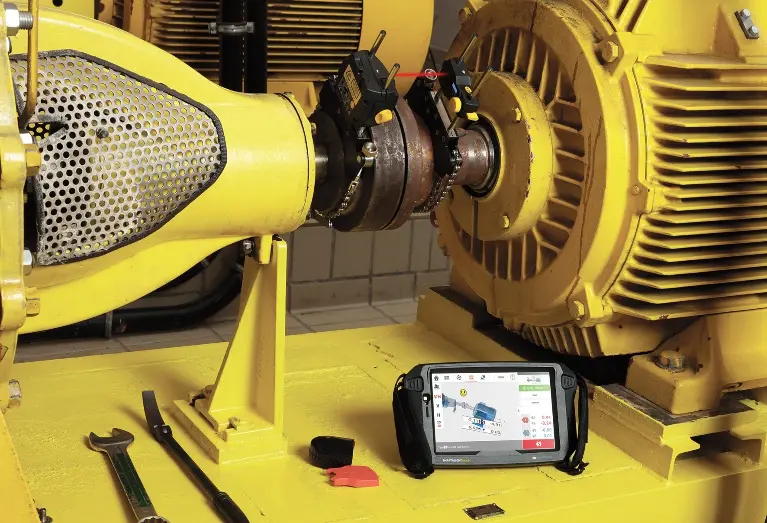
With RotAlign Touch, adjusting for thermal growth is simple.
Just enter three values:
- Starting temperature (when the machine is off)
- Operating temperature (when running at full load)
- Distance from the machine base to the shaft centerline
The system automatically calculates the exact thermal growth compensation needed — no complex math required.
See Changes in Real Time
RotAlign Touch’s Live Trend feature tracks how shafts move as the machine dynamically heats up, allowing you to see whether thermal growth occurs evenly or if misalignment develops in one direction more than the other.

The system uses high-precision laser sensors to monitor positional changes as the machine moves from cold start to full operation. Once the machine turns on and begins to heat up, the device logs every positional shift — tracking both vertical and horizontal thermal growth as temperatures rise. When the machine reaches full operating temperature, the system captures the final alignment state. Technicians can use that data to set precise alignment targets, ensuring that once thermal expansion occurs, the shafts are positioned exactly where they should be. Therefore, by aligning based on actual machine behavior, you eliminate the trial and error of correcting misalignment after startup.
Live Trend also monitors pipe strain and process-related machine movement during the run-up and coast-down phases, giving you a complete picture of how forces act on your equipment throughout its operating cycle. And because alignment is only part of the equation, Live Trend also tracks machine vibration, helping catch early warning signs of imbalance, excessive strain, or developing faults before they escalate.
Align Once, Run Smoothly
With RotAlign Touch, accounting for thermal growth is quick, precise, and effortless — so you can align with confidence and keep your machines running at peak efficiency.
A global turbine manufacturer learned this firsthand. The company’s machines were perfectly aligned at shutdown, but after startup, everything changed. High speeds and extreme temperatures caused shafts to shift unpredictably, creating vibration issues that traditional alignment methods could not catch.
Using RotAlign Touch, the manufacturer monitored shaft position throughout warm-up and full operation. The data revealed its machines were not staying aligned and what needed to change.
Are You Aligning for the Future?
You would not set your watch to the wrong time and expect to be on schedule. So why align a machine at room temperature and expect it to stay that way when it’s running hot?
With RotAlign Touch, you can factor in thermal expansion before it throws off machine alignment. In the real world, machines don’t just run — they dynamically move, expand, and settle. And if your alignment does not account for that, you will always be one step behind.
With RotAlign Touch, you can align for how your machine runs, not how it rests.
Prüftechnik also offers laser alignment services that leverage state-of-the-art tools such as RotAlign and OptAlign to expertly measure and align your assets. Our experts can take care of the job for you, ensuring proper alignment the first time.
Thermal Growth as Part of Predictive Maintenance
Tracking thermal expansion is a useful metric for your predictive maintenance program. Heat-induced changes in alignment appear through:
- Vibration patterns: If vibration levels change with load or temperature, it often points to thermal misalignment.
- Infrared thermography: Hot spots on bearings or housings may indicate expanding shafts, friction points, or misalignment.
Online condition monitoring systems such as VibGuard can track subtle thermal growth vibration signatures via sensors and alert maintenance teams before failures occur. And for a broader picture of asset health, you can track data from sensors and handheld tools with a centralized platform like OmniTrend Center. By linking temperature, vibration, and alignment trends, you create a proactive approach to managing thermal effects across your asset fleet.
Related Links