Turbine Alignment: Tools and Strategies for Optimal Performance
Turbines are a critical component of many industries, like power generation and oil and gas. As such, keeping turbines operational is a top priority for teams in these industries. Regular alignment is a standard preventive maintenance practice, but large, complex machines such as steam and gas turbines can be particularly difficult to align.

This guide will discuss the importance of turbine alignment and the challenges teams face during the alignment process. We’ll also discuss tools and best practices teams can use to ensure precision alignment, even in difficult environments.
What Is a Turbine?
A turbine is a machine that converts energy from a moving fluid (liquid, gas, or air) into mechanical rotational energy, which is often used to generate electrical energy or drive other machines. For example, wind turbines are used to convert wind energy into electricity. Steam turbines do the same thing by converting steam produced in a boiler (from sources like fossil fuels, nuclear reactions, or geothermal heat) into rotational mechanical energy, which can then be transferred to electricity. Industrial gas turbines are also used to produce mechanical power to drive generators, compressors, or pumps.
For energy to transfer smoothly, whether it’s from a wind turbine converting to electrical energy or from a steam turbine creating mechanical energy, all machines involved in the process must be properly aligned along the same rotational axis.
Why Turbine Alignment Is Important
Turbine misalignment results in poor efficiency during the power transfer process. Misalignment in turbines causes increased friction, so some of the energy produced is lost as heat (thermal energy) instead of being transferred to the desired medium. Vibrations can also increase, which is a form of wasted mechanical energy.
Besides energy waste, excess heat and vibrations can damage the machines and components. Misalignment results in unequally distributed forces across components like seals, bearings, and other components, shortening their lifespans and increasing maintenance costs.
Misalignment is the root cause of over half of failures in rotating equipment, and for gigantic equipment like turbines, the cost of repairing those failures can escalate quickly. Increased maintenance to replace failing components also leads to excessive downtime and increased labor costs, impacting revenue and production while teams work to replace components or perform repairs.
The larger the turbine, the more power it can convert. However, their larger sizes also pose significant challenges to turbine alignment.
Challenges of Turbine Alignment
In a smaller setting, there may be just two shafts to align. However, larger, more complex turbine alignments require aligning an entire machine train, including turbines, generators, compressors, and gearboxes, to meet the required geometric tolerances.
But this is easier said than done, especially in power generation and other heavy industries that utilize enormous turbines. Key challenges of this type of multi-coupling alignment include:
- Size constraints: Turbine rotors and casings can be extremely large and heavy. For example, the blades on a steam turbine can reach six feet (1.83 meters) in length, while blades on a wind turbine can exceed 492 feet (150 meters), longer than a football field. Casings can weigh thousands of tons. These enormous sizes can make it difficult to both measure alignment and to achieve alignment.
- Weight: Steam turbines are enclosed in a casing, which must be removed to perform proper alignment. However, the sheer weight of the casing can throw alignments off. Even when a tops-off alignment is performed perfectly, putting the top back on can shift the components enough to cause misalignment.
- Thermal expansion: Aligning steam turbines can be especially challenging since they can operate at temperatures over 2,000°F (1,093°C). Since materials expand at different rates, and because of the extremely high temperatures these components can reach, thermal expansion is a major challenge in achieving steam and gas turbine alignment. Components may expand by many millimeters at 2,000°F, requiring predictive adjustments to be made during the turbine alignment.
- Increase in potential errors: Complex, multi-coupling machine trains often include a rotor, a gearbox, and a generator, which must all be aligned together. Each coupling adds a potential misalignment point. Large distances between components, in addition to the multiple couplings, add complexity to the turbine alignment process.
- Limited access: Challenging field environments often lead to limited access and difficulty in taking alignment measurements. For instance, machines may not be able to be fully rotated during the alignment process due to restricted movement. Nuclear plant turbines are in radiation-controlled zones, limiting technician access. Technicians may also have an obstructed line of sight or have to work in cramped areas.
Despite the challenges, turbine alignment is achievable with the right tools and maintenance practices in place.
Turbine Alignment Best Practices
Proper turbine alignment is critical to ensuring efficient energy transfer, minimizing wear, and extending the lifespan of components in power generation and industrial systems. Below are best practices to achieve and maintain alignment, even in the face of challenges like massive scale, thermal expansion, and complex machine trains.
1. Align During Commissioning
Alignment starts at the commissioning phase, when a turbine system is first installed or overhauled. This initial alignment sets the baseline for performance and longevity. For example, a steam turbine rotor, which may weigh as much as 40 tons, must be aligned within 0.02 mm to ensure smooth operation with generators or compressors. Use high-precision tools like laser alignment systems to measure shaft centerlines across large distances, such as the 20–30 meters of a typical machine train. Proper commissioning alignment reduces initial vibrations and prevents cumulative wear, reducing maintenance costs over a turbine’s life.
2. Compensate for Thermal Growth
To address thermal expansion, use manufacturer-provided thermal growth data or software models to predict expansion rates for materials like steel or titanium alloys.
3. Use Advanced Capabilities for Machine Train Alignment
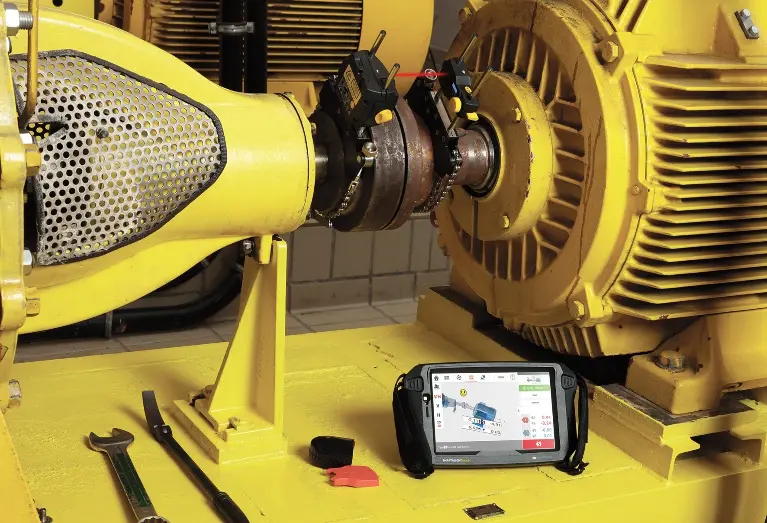
Modern laser alignment systems, such as those from Pruftechnik, enable “live move” capabilities, allowing technicians to adjust components in real time while monitoring alignment across all couplings. Live move tools provide visual feedback, ensuring adjustments keep the entire train within tolerance. This is especially vital in field environments where restricted access complicates adjustments.
4. Routine Checks and Trending Alignment Data
Alignment isn’t a one-time task. Regular checks are essential to maintain performance as turbines age or operating conditions shift. Schedule alignment inspections during planned maintenance or after significant events like casing reinstallation. Use vibration monitoring and alignment sensors to trend data over time, identifying gradual misalignments before they cause damage. Store alignment data in maintenance software to track trends, such as increasing vibration or bearing wear, and predict when realignment is needed.
How Laser Alignment Systems Simplify Turbine Alignment
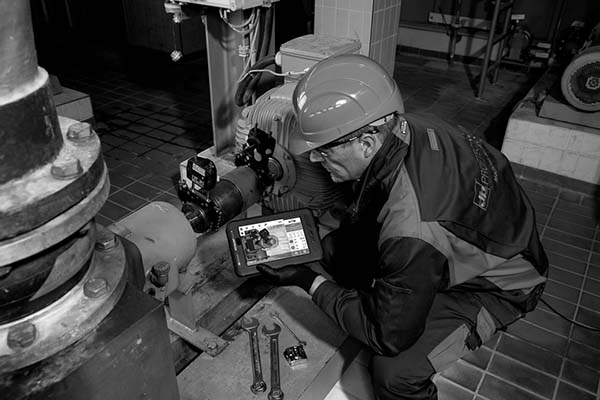
Turbine alignment using traditional methods like dial indicators is extremely challenging due to the size and complexity of the machines. However, single-laser alignment systems like RotAlign, OptAlign, and ShaftAlign are built to adapt to the challenging environment of turbine shaft alignment and have several features that make perfect alignment achievable.

The size of turbines means that they don’t spin freely during the alignment process without the assistance of cranes, chain falls, or hydraulic jacks. Features like IntelliPoint measurement mode record alignment at multiple stopping points, removing errors caused by uneven rotation or shaft settlement.
LiveTrend is another Pruftechnik feature that measures and records the real-time positional changes caused by thermal growth during operation by measuring the parallel and angular displacement. Teams can then use this information during cold alignments to position the turbine shafts so they will be aligned when they reach full operating temperature.
Even aligning complex, multi-coupling machine trains is easier with laser tools. The RotAlign Touch can align a machine train of up to 14 machines. In multi-coupling mode, a single turn of the shaft can take readings of every coupling in the train, without needing to move the sensors from coupling to coupling. The system then provides results showing how much each machine on the train needs to move to reach alignment, providing field-ready workflows to simplify even the most complex machine alignments.
All Pruftechnik laser alignment systems can upload digital documentation directly to the cloud for easy access, reporting, and long-term traceability. This ensures that every alignment is recorded, reviewed, and stored, helping teams demonstrate compliance and streamline future maintenance.
Laser alignment systems can cut steam turbine alignment time in half. With Pruftechnik’s laser alignment systems, turbine alignment becomes not only achievable but efficient, accurate, and repeatable.